Andalucía · Spain · Sales
XCharge GridLink for the Spanish market
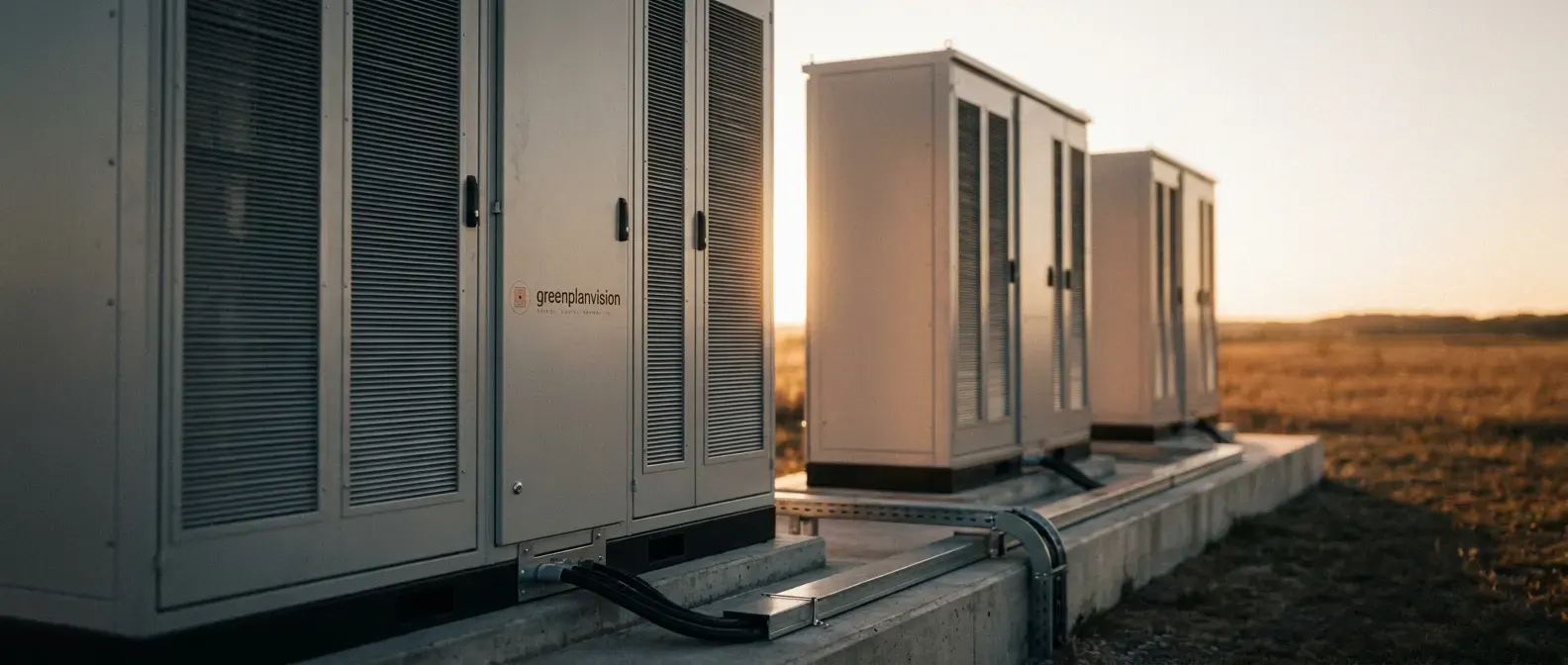
Multi-use storage: DC charging up to 194 kW (variant up to 300 kW), backup power and peak shaving. 215 kWh in the station, often only 22–44 kW from the grid. Focus Andalucía; Spain-wide.
The battery is not only at the charging cable. GridLink charges vehicles, holds backup power and cuts the peak that drives the Spanish capacity charge. One battery, several uses: multi-use. 215 kWh LFP, expandable to 2 × 215 kWh. Most of the charging power comes from the battery, not from the grid. In Andalucía, available contracted capacity often matters more than the wish for high kW at the vehicle.
Why this matters in Spain
Multi-use instead of charging only
The same 215 kWh battery serves fast charging, backup power and peak shaving. One station, several uses, one connection.
Peak shaving
The Spanish término de potencia penalises peaks. Peak shaving lowers the highest drawn power. The battery takes the surge, the grid stays at 22 or 44 kW.
Backup power
Off-grid: keep charging and supply an AC load when the public grid is down. For hubs, industry, fleets and critical sites.
Contracted capacity instead of a mega connection
44 kW three-phase 400 V is enough for up to 194 kW DC. If a new acometida upgrade is not available, two CCS2 points can still run. Public access: often TDVE tariff.
EU law: obligation and funding are not the same
The EU pushes charging infrastructure. Legally, two layers must be separated: binding deployment targets and optional co-funding. There is no automatic rule that “the EU pays for every charger”.
AFIR – Regulation (EU) 2023/1804
Hard law: Member States must deploy publicly accessible charging along TEN-T and in nodes. Rules on ad-hoc payment, price transparency and data. That is a deployment duty, not a grant promise to every operator.
CEF / AFIF – real EU grants
Through the Connecting Europe Facility and the Alternative Fuels Infrastructure Facility, the EU co-funds selected projects (often heavy-duty / TEN-T, competitive calls). Typical rate up to about 30 % of eligible costs; batteries and energy management can count as electricity infrastructure of the charging pool – only if the call and the site fit.
National schemes implement EU goals
Spain and Andalucía fund via their own calls (historically e.g. MOVES; currently depending on open tenders). The German THG quota does not apply in Spain. Check site and call first, then model returns.
GridLink in a funding context
Low grid power with high DC output helps where AFIR-level service is needed but the connection is tight. Whether a concrete project gets AFIF or national support is clarified before a quote – without guarantee.
Use in the Spanish market
Fleet depots
Charging, backup and peak shaving on the same connection. Focus Andalucía; also Madrid, Barcelona, Valencia.
Charging hubs and petrol stations
Two CCS2 plus backup when the grid is down. Without extra grid capacity – often the decisive lever on the motorway and in town.
Shopping centres and car parks
Customer charging and shaving building peaks. One plot, one connection. AFIR-ready ad-hoc payment included.
Industry and critical loads
Backup for hall and control room. 215 kWh buffer, optionally doubled.
Technical data
Figures from GridLink datasheet V1.1 DE (1 June 2026), XCharge Europe GmbH. Project values may differ.
| Type | DC charging station with ESS, floor-standing, IP54 |
|---|---|
| Battery | LFP, 215 kWh, scalable to 2 × 215 kWh |
| DC charging | 2 × CCS2, max. 194 kW, 375 A continuous (boost 500 A) |
| Grid connection | 3-phase 400 VAC ± 10 %, 22/44 kW, 50/60 Hz |
| PV input | 300–740 V DC, max. 30 kW |
| Off-grid / to-grid | 150 kW off-grid; 44 kW feed-in |
| Size / weight | 2236 × 970 × 2080 mm; 3600 kg (without cable management) |
| Communication | OCPP 1.6J / 2.0.1, RFID, credit card, GSM/LTE/LAN |
Sales Spain, manufacturer XCharge
- XCharge Europe GmbH is the manufacturer. Test competence at the SGS lab in Madrid.
- I am the sales partner for the Spanish market with focus Andalucía: site, connection, quote and delivery.
- First call 30 minutes. After that we check whether GridLink fits the actual connection.
Common questions
Is 44 kW really enough for 194 kW charging?
Yes, because the battery takes the surge. The grid supplies 22 or 44 kW; the battery adds up to 150 kW. The datasheet states 150 kW + 22/44 kW = 172/194 kW. This requires sufficient state of charge and the selected operating mode.
Does the EU fund every charger?
No. AFIR obliges Member States to deploy and to set user rules. Real grants run through competitive programmes such as CEF/AFIF or national calls – not automatically for every project. The German THG quota does not apply in Spain.
Is it certified for Spain?
The EU datasheet (CCS2, 400 V, OCPP, IEC 61851, ISO 15118) is the European variant, not the US variant. Site-level approval (REE, distributor, ayuntamiento) remains a project matter. XCharge operates an SGS test lab in Madrid.
Is this only a charging post?
No. Multi-use: the same battery charges, holds backup power and shaves peaks. Off-grid up to 150 kW, peak shaving against the Spanish capacity charge, optional 30 kW PV straight into the battery.
Does GreenPlanVision sell the station?
Yes. For the Spanish market I am the sales partner. XCharge Europe GmbH is the manufacturer. Quote, delivery and on-site support run through GreenPlanVision.
Manufacturer: XCharge Europe GmbH · xcharge.com